Commercial & Industrial Solar PV
Rooftop, ground-mounted and carport solar for warehouses, factories, retail sites and offices, engineered around your measured load, tariff and operating hours, with battery storage and generator integration where the numbers support it.
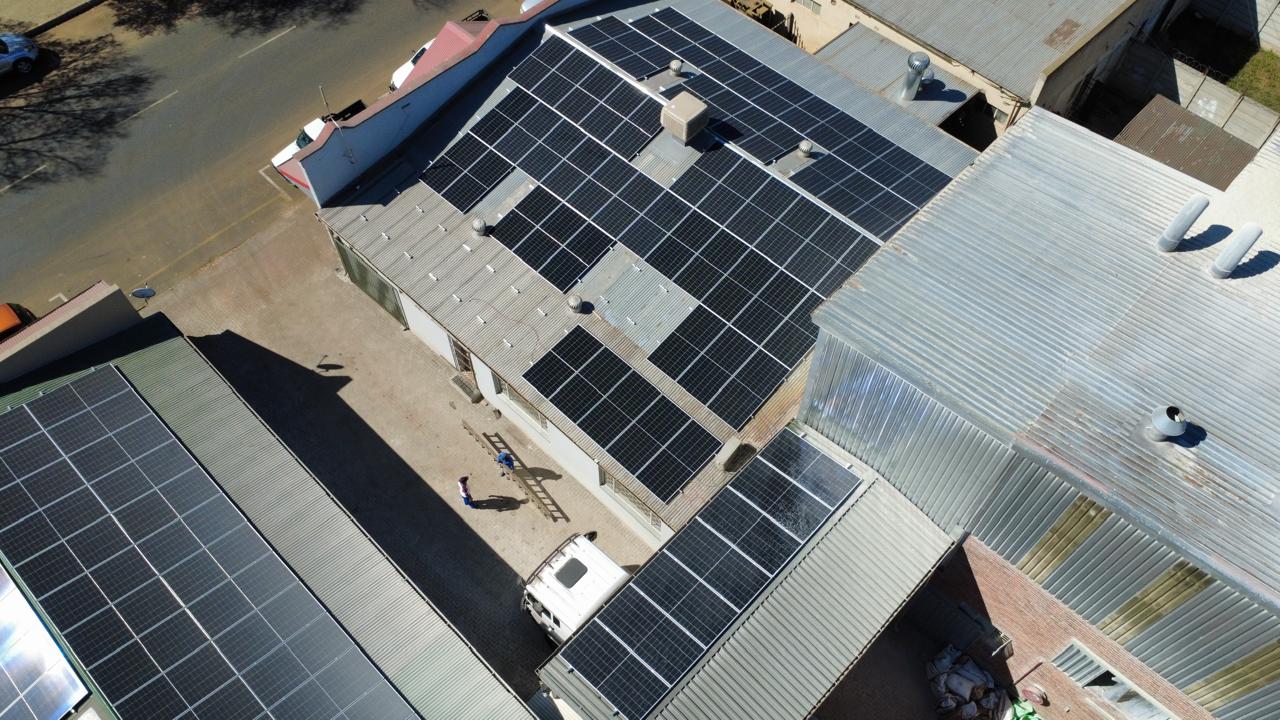
What we deliver for businesses
Commercial and industrial sites need three things from an energy system: lower cost per kWh, control of peak demand, and continuity when the grid fails. We assess, engineer, procure, install, commission and support the complete system rather than only supplying equipment.
- Solar PV: roof-mounted, ground-mounted and solar-carport arrays, laid out to get the most useful generation from the space available.
- Battery energy storage: lithium-ion storage for backup, load shifting and peak-demand management. See battery energy storage.
- Hybrid and microgrid systems: PV, inverters and batteries designed around critical loads, operating hours and the autonomy you need.
- Generator and grid integration: coordinated operation that removes downtime from grid interruptions and cuts diesel runtime.
- Monitoring and power quality: metering, interval-data analysis and power-factor assessment. See energy monitoring and power quality.
How a system is specified
The aim is not the largest possible system. It is the correct system for the application.
- Site and objective assessment. We define your priorities: savings, backup duration, operational continuity, grid independence, future expansion, or a mix.
- Data collection and validation. Electricity accounts, tariff schedules, interval data, maximum demand, operating hours, generator usage and critical loads.
- Energy and power-quality logging. Where data is unreliable, three-phase meters or loggers measure actual load behaviour, power factor and peak demand.
- System modelling. Combinations of PV, inverter power and battery capacity are modelled against the load profile and installation area.
- Engineering integration. The design is coordinated with the grid connection, generators, distribution boards and critical equipment.
- Commercial optimisation. Options are compared on capital cost, expected savings, backup performance, funding structure and long-term value.
Projects at this scale
500 kW commercial and industrial energy system
| Inverter capacity | 500 kW (Megarevo) |
|---|---|
| Solar PV | 725 kWp rooftop array |
| Battery storage | 2.15 MWh |
A high-capacity system with large rooftop PV coordinated with power conversion and storage, delivered end to end: engineering, procurement, electrical integration and commissioning.
200 kW hybrid system for a 24/7 engineering facility
| Inverters | 4 × Deye 50 kW in parallel (200 kW) |
|---|---|
| Solar PV | 235 kWp |
| Battery storage | 860 kWh |
Multiple power-conversion units, substantial battery capacity and distributed solar generation integrated into one coordinated platform for a facility that runs around the clock.
Ways to fund a commercial system
Outright purchase, rental, rent-to-own, Power Purchase Agreement and Section 12B asset finance are all available, subject to project and credit approval. Each is modelled against expected generation, tariff exposure, contract term, escalation assumptions and cash-flow impact. Compare the finance options or try the finance calculator.
Compliance and quality
- Electrical design review by an in-house Electrical & Design Engineer holding a Certificate of Competency as a Certificated Engineer.
- Installations signed off with Certificates of Compliance by a Department of Employment & Labour registered electrical contractor.
- PV GreenCard accredited installation staff and a certified Approved Deye Installer.
- Documented testing, commissioning and handover on every project.
Frequently asked questions
How do you size a commercial or industrial solar system?
We start with data, not a product. Electricity accounts, tariff schedules, interval data, maximum demand, operating hours, generator usage and critical loads are reviewed. Where reliable data is not available we install three-phase meters or power-quality loggers to measure the actual load. Different combinations of PV, inverter power and battery capacity are then modelled against the site's load profile and the roof or ground area available.
Can a business get solar without paying the capital upfront?
Yes. Besides outright purchase, projects can be structured as a rental agreement, rent-to-own, a Power Purchase Agreement (PPA) or asset finance. All funded structures are subject to technical, financial and credit approval. See our finance options.
How long does a commercial installation take?
It is project specific. The programme depends on system scale, site access, equipment lead times and your operating requirements, and it is set out in the proposal before work starts.
Can solar work together with our existing generators?
Yes. We design coordinated grid, battery and generator operation so that the site keeps running through grid interruptions and the generators run for fewer hours, which reduces diesel use.
Is there a tax incentive for businesses that install solar?
Section 12B of the Income Tax Act allows businesses an accelerated deduction on qualifying renewable-energy assets. How it applies depends on your system and tax position, so confirm the treatment with your tax adviser before you rely on it.
Talk to our team about your site
Send us your electricity bills or load data and we will come back with a data-driven proposal: system size, expected savings, backup duration and funding options.